


 العربية
 Kurdish
 فارسی
فارسی Русский

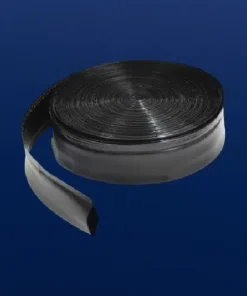
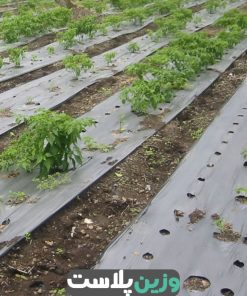
Good and sufficient irrigation is essential for all plants and is a fundamental factor in a good harvest. Irrigation nylon is one of the equipment that helps you provide the required moisture to the soil in the most optimal way possible.
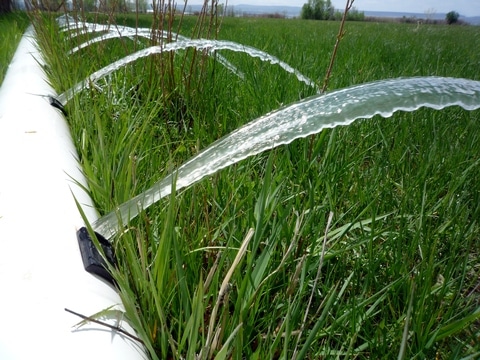
What is irrigation nylon?

The nylon irrigation pipe has holes for water to exit. The spacing of these holes on the pipe varies and is selected based on the type of field crop and planting method. The most commonly used irrigation tape in terms of the distance between the holes is 20 and 30 centimeters. These distances are also available in the market in types of 10, 15, 25, 40, 50, 60, 80 and 100 centimeters. Each of these outlets has the ability to deliver 0.8, 1.3, 1.5, 1.6, 2, 2.5 and 3.8 liters per hour. Depending on the number of holes on these pipes, the amount of water per meter can be easily obtained.
Advantages of using irrigation nylon
Nylon irrigation is a good alternative to hard and metal pipes, as it provides the irrigation process in the best possible way and with the least losses. Some of the advantages of this product are as follows:
- In this method, irrigation is done locally without water flowing on the ground surface. This minimizes water consumption and makes weed control easier.
- The softness and flexibility of these pipes allow them to be easily installed and operated on uneven and sloping terrain.
- This method makes it possible to inject soluble fertilizers well and uniformly across the field.
- Minimizes losses due to wetting of plant leaves and prevents leaf burns.
- Due to the elimination of canals and watercourses in agricultural fields, the movement of agricultural machinery will become easier.
- Reduces manpower compared to the traditional method.

Calculating the amount of irrigation plastic needed per hectare of land
To buy the required amount of irrigation nylon, it is enough to know the distance between the strips and divide the number 10,000 (each hectare of land is equivalent to 10,000 square meters) by that distance in meters for each hectare. In our case, this distance is 75 centimeters, which is equivalent to 0.75 meters in meters. Now, if we divide 10,000 by 0.75, the result of this division will tell us the amount of tape required for each hectare, which in this example is equivalent to 13,300 meters. It should be noted that the amount obtained from this method is approximate and the exact amount of irrigation tape you need depends entirely on the plant you are growing.
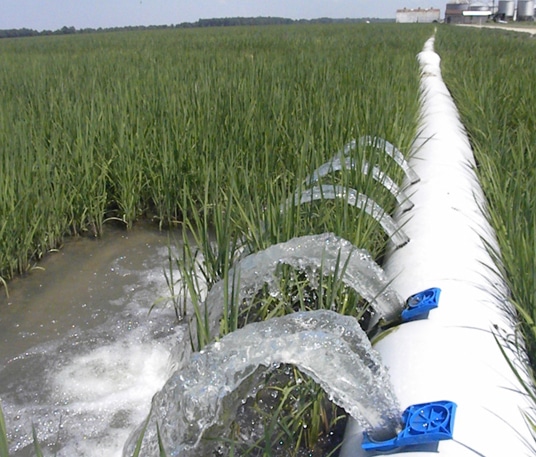
Frequently Asked Questions
- Why should you use irrigation plastic? This system aims to save water and improve the overall efficiency of plant growth in agriculture.
- In which areas is irrigation nylon used? This method can be a good alternative to conventional methods such as kurti, tape, furrow, and furrow in dry and water-scarce areas and lands where water loss during irrigation is high.
- What crops are suitable for irrigation with nylon pipes? Irrigation tapes are used for dense and row crops such as vegetables, summer crops, corn, wheat, fodder, watermelon, melon, tomato, onion, potato, strawberry, sunflower, sugar beet and cotton. This product can be used in fields, greenhouses and nurseries.
- On what basis is the price of irrigation nylon determined? The price of this product is determined according to factors such as area, thickness, additives and raw materials. For more detailed information about the price of this product, please contact Vazin Plast Company.



There are no reviews yet.